Key pieces of the Judicial Council's 2015 Strategic Plan for Language Access remain unimplemented.
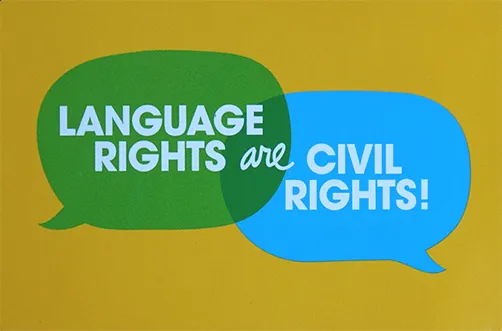
August 4, 2026 – San Francisco, CA – Legal advocates and community leaders are calling on the Judicial Council of California to suspend the use of automated translation in California courts and fully implement required language access measures, warning that machine translation is denying court users meaningful access to justice and worsening inequality across the state.
In public comment to the Language Access Subcommittee of the Council’s Advisory Committee on Providing Access and Fairness, 35 organizations—led by California Rural Legal Assistance, Inc. (CRLA), Legal Aid Foundation of Los Angeles (LAFLA), and Mixteco Indígena Community Organizing Project (MICOP)—detail how courts’ widespread failure to meet language access standards locks Californians out of critical legal proceedings, with life-altering consequences.
“As the most linguistically diverse state and home to the nation’s largest court system, California has a responsibility to ensure that language is never a barrier to justice,” said Joann H. Lee, Special Counsel on Language Justice at LAFLA. “For many people, court proceedings involve some of the most consequential moments of their lives. Yet too often, they are left unable to fully understand or participate in decisions that affect their families, housing, safety, and livelihoods.”
In 2015, the Judicial Council adopted a language access plan that outlined clear steps to meet courts’ legal obligations to serve all residents. In 2020, with many of those commitments yet to be fulfilled, courts instead began using machine translation, often without oversight of qualified human translators and interpreters.
Advocates’ comments illustrate the risks of machine translation through numerous examples drawn from state court data, including one case where a court staffer’s instructions were translated as “Sting the judge to reduce a fever.” In another case, the automated translation app rendered “DUI” as “IUD.” Errors like these create confusion and cause people to miss court dates and filing deadlines, lose opportunities to reduce fines or avoid points on their driver’s licenses, and make uninformed decisions about their cases.
“As we see an increase in the use of machine translation tools and other AI technologies in courts and other public agencies, it is imperative that these entities implement safeguards that ensure accuracy,” stated Norma Ventura, Indigenous Justice Program Director at CRLA. “Safeguards such as qualified human review ensure equal access to services for all communities.”
“The Judicial Council’s 2015 Strategic Plan for Language Access was an important step forward, but its promise remains unrealized,” added Vanessa Terán, Policy Director at MICOP. “More must be done to ensure that everyone, regardless of the language they speak, can fully understand and participate in proceedings that profoundly affect their lives, particularly for the Indigenous immigrant community, who have historically faced vast discrimination in the judicial system due to speaking their native language and not English or Spanish.”
Read advocates’ full written comment to the Judicial Council here.